The home at Aughawillan
The Greatest Beer Run Ever: A Memoir of Friendship, Loyalty, and WarThe home at Aughawillan is the family house from which John McGahern and his siblings were removed while Susan McGahern was dying. Its rooms become the setting for two sharply different experiences: the hurried removal of a household on the day of departure, and a later return to a house emptied not only of furniture but of Susan McGahern’s presence. In the memoir, the home’s ordinary contents, narrow stairs, garden and surrounding fields give physical form to the separation and to the grief that follows it.
Setting and Household
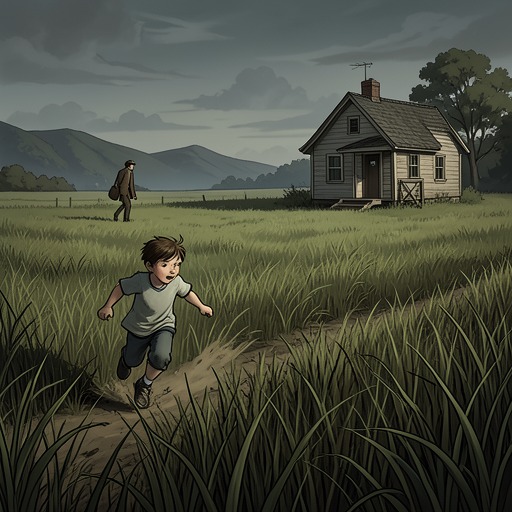
The house stood at the end of a cart path reached through a gap from the road, with a cinder path running to a small iron gate. A flower garden bordered it, and the farm included a hill where the family’s animals grazed. The house was modest enough for its contents to be removed in an hour or two, yet clearing it seemed to John McGahern to take a whole day. This contrast between the small building and the enormous felt duration of its emptying establishes how a domestic place can become inseparable from the crisis unfolding inside it.
The household’s things were closely interwoven with its daily life. The downstairs furniture included a table, chairs and yellow dresser; pots, buckets, basins, the flour bin and milk churn stood among the working equipment. Tea chests held cups, plates and saucers wrapped in towels and dishcloths, while the lamps had been emptied of oil and religious pictures taken from the walls. Upstairs were a wardrobe, chest of drawers, mattresses, bedclothes and white enamel pots. The inventory records a functioning home being dismantled piece by piece, rather than an abstract or instantaneous departure.
The House Is Emptied
A lorry arrived on a late-June morning, with only its driver. The move had evidently been arranged the previous night: the brown hens had not been let out and were packed into crates for the journey. Margaret and Monica went to school by way of Brady’s pool and house, the street of the old Mahon brothers, the quarry, railway bridge and Mahon’s shop; the rest of the children were kept home. Uncle Pat and Maggie were in the house, as were two workmen who had not been there for weeks. The lorry was guided through the open gap and down the cart path, then turned and parked on the cinders between the house and flower garden.
The driver handed Uncle Pat a note, which Maggie read. She told him what it said in a voice so low and rapid that no one else could hear. The men began downstairs and then worked through the upstairs rooms, carrying the household’s contents to the lorry. The iron beds were left until last. Dampness had rusted their joints so firmly that bicycle oil and brute strength failed to separate them; a hammer had to be found. Its blows rang through the house and shook the thin walls until the sections finally came apart with a light clang. The home’s last dismantling thus became audible: the structure that had held family life reverberated as its beds were broken down for removal.
While the lorry filled, John McGahern stood by the overgrown flower garden, delaying the moment when he would go upstairs to see Susan McGahern for the last time. He had already said goodbye to the cows, white bullocks and goats on the hill. When he approached the old jennet, it galloped away, mistaking his presence for a sign that it would be harnessed for work. Breedge, Rosaleen and Dympna, along with Katie McManus carrying the baby, had already visited the sickroom. Their excitement at the commotion felt incomprehensible to him; he experienced it as a gulf between their apparent participation in the move and his knowledge of what was happening to their mother.
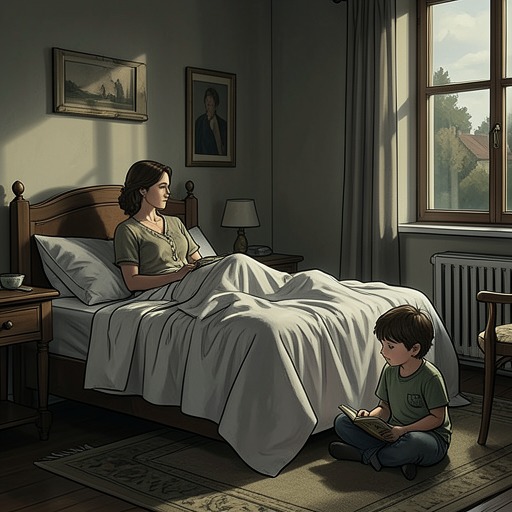
The nurse eventually motioned him inside. With the furniture gone, the house seemed much larger. John McGahern climbed past open doors and empty bedrooms and entered Susan McGahern’s room, where Maggie and the nurse were present. His announcement that the lorry would soon leave marks the collision of two departures: the family’s removal from the house and his last opportunity to be with his mother there.
Memory and the Irrecoverable Home
After Susan McGahern’s death, John McGahern remembered her not in one room alone but across the routes and routines that connected their life together. He recalled walking with her to Lisacarn School, Beaghmore School and Aughawillan; travelling by train; going from shop to shop with her in town; watching the great evening fires at Aughawillan; and going for milk at Ollarton’s when the moon showed them the way. These recollections make the home part of a wider lived landscape, linked to school journeys, errands and evenings rather than confined to the building itself.
That network of remembered places also sharpens the finality of her absence. Susan McGahern was gone to a place John McGahern could not follow, and he knew he would never see her face again. He was tormented by the time he had spent beside the garden instead of going to her room sooner, imagining the lost minute he might have spent with her and wondering what she thought as the lorry departed. The house’s removal and his mother’s death converge in this regret: he had delayed entering the room at the same moment the family was making the home impossible to return to as it had been.
The Later Return
On a later visit, Uncle Pat drove John McGahern back to the Aughawillan farm after meeting the trains and completing an evening run. They opened the gap and crossed the field to the house. The flower-garden fences had been broken down, and nearly all the flowers had been trampled or eaten; only a few roses remained. By contrast, the cinder path to the little iron gate was still clear of grass and weeds. Pat unlocked the door, and they entered a house whose big fireplace was full of ashes before climbing through the empty rooms.
They spent a long time in the room where Susan McGahern had died. John McGahern looked at the low, deep windowsill where he used to sit and talk with her for hours. In his memory, it had been a place of painful intensity, but the actual room did not prove as sharp, vivid or painful as he had anticipated. The house and fields instead offered a dull reassurance through their solidity. They remained physically present, but were empty forever of Susan McGahern’s presence and life. The return does not restore the home; it tests memory against a place that has survived its most important absence.
As they came downstairs, Uncle Pat remarked on the house’s fragility and on the advantage of having got rid of it quickly, since two farmers could become difficult rivals when bidding against one another. The comment shifts the house into a practical world of condition and disposal, sharply unlike John McGahern’s memories of the room and its lost intimacy. They then took the bridle and searched the hill for the jennet and bullock. The jennet, which had done no work since the family left and had grown sleek on summer grass, squealed at their approach and galloped away. The animal’s return to the hill’s life contrasts with the house’s irrevocable emptiness.
Narrative Significance
The home at Aughawillan holds together the domestic and the irreparable. Its inventory, the stuck iron beds and the hammering that shakes its thin walls make departure a sequence of material tasks; John McGahern’s delay in the garden reveals what those tasks cannot accommodate. Later, the empty rooms, damaged garden and surviving roses show that a place can remain while the life that gave it meaning is gone. By returning to the same house in memory and in person, the memoir distinguishes recollection from recovery: the building and fields still stand, but neither can return Susan McGahern or undo the missed final time at her bedside.